Why Base Leads Real-World Asset Tokenization
Base has emerged as the primary infrastructure layer for real-world asset (RWA) tokenization, driven by its unique position within the Coinbase ecosystem. Unlike other layer-2 networks that rely on generic developer incentives, Base leverages direct integration with Coinbase, the largest regulated crypto exchange in the United States. This connection provides a critical bridge for institutional capital, allowing tokenized assets to move seamlessly between on-chain liquidity and traditional financial rails.
The cost efficiency of Base further accelerates adoption. With transaction fees typically fractions of a cent, the network removes the economic friction that often makes tokenizing smaller asset classes—such as real estate or private credit—prohibitively expensive. For RWAs, where margins can be thin and transaction volumes high, this low-cost environment is not just a convenience; it is a prerequisite for scalable business models.
Institutional appeal is another defining factor. Regulators and traditional finance firms are increasingly cautious about decentralized networks with opaque governance or high regulatory risk. Base’s compliance-friendly architecture, backed by Coinbase’s regulatory engagement, offers a safer harbor for institutions looking to tokenize assets without navigating the legal ambiguities of more decentralized alternatives. This trust factor is essential for moving trillions of dollars in traditional assets onto the blockchain.
To understand the current market dynamics, it is useful to look at the broader Ethereum ecosystem, which serves as the settlement layer for most Base activity. The following chart illustrates the price action of Ethereum, providing context for the liquidity and security that underpins the Base network.
Key infrastructure players powering the hub
Base functions as a real-world asset hub not because of its transaction speed alone, but because of the middleware layers that make tokenized assets viable. These protocols handle the messy work of bridging traditional finance to on-chain liquidity: oracle data feeds, institutional-grade custody, and standardized token contracts. Without this stack, tokenized assets remain theoretical concepts rather than tradeable assets.
Oracle and Data Feeds
Real-world assets require accurate, tamper-proof data to function. Chainlink serves as the primary oracle infrastructure for Base, providing price feeds for assets like USD Coin (USDC) and tokenized treasuries. This data is critical for smart contracts to execute trades or calculate collateralization ratios without relying on centralized intermediaries.
The Chainlink Decentralized Oracle Network (DON) ensures that price data for tokenized assets is aggregated from multiple independent sources. This reduces the risk of single-point failures, a common vulnerability in early DeFi protocols. For Base-based tokenized assets, this means that the value of a tokenized real estate property or a corporate bond is reflected accurately in real-time.
Custody and Compliance
Institutional adoption of tokenized assets hinges on secure custody solutions. Protocols like Fireblocks and Copper provide multi-party computation (MPC) wallets that meet institutional security standards. These custodians hold the underlying assets (such as U.S. Treasuries or private credit notes) while issuing the corresponding digital tokens on Base.
Compliance is equally important. Base integrates with identity providers like Polygon ID and Chainlink CCIP to enable selective disclosure. This allows institutions to verify that token holders are accredited investors or KYC-compliant without exposing sensitive personal data on a public blockchain. This balance of transparency and privacy is what attracts traditional finance players to the network.
Tokenization Standards
The standardization of tokenized assets reduces friction for developers and investors. ERC-3643 (T-REX) and ERC-1400 are emerging as the preferred standards for security tokens on Base. These standards embed compliance rules directly into the token contract, ensuring that transfers only occur between verified addresses.
Unlike generic ERC-20 tokens, these standards allow for transfer restrictions, dividend distributions, and ownership registries. This makes them suitable for representing complex financial instruments like private equity or structured products. As the ecosystem matures, we are seeing a shift from custom, one-off token contracts to these standardized frameworks, which improve interoperability across different DeFi protocols on Base.
Comparison of RWA Infrastructure
The table below compares the key infrastructure providers enabling tokenized assets on Base.
| Provider | Type | Function |
|---|---|---|
| Chainlink | Oracle | Provides decentralized price feeds and data verification for RWA smart contracts. |
| Fireblocks | Custody | Offers MPC-based institutional custody for the underlying real-world assets. |
| Conduit | Tokenization | Provides the tech stack to tokenize, distribute, and manage private credit and real estate. |
| Polygon ID | Identity | Enables zero-knowledge proofs for KYC/AML compliance on-chain. |
Market size and growth drivers in 2026
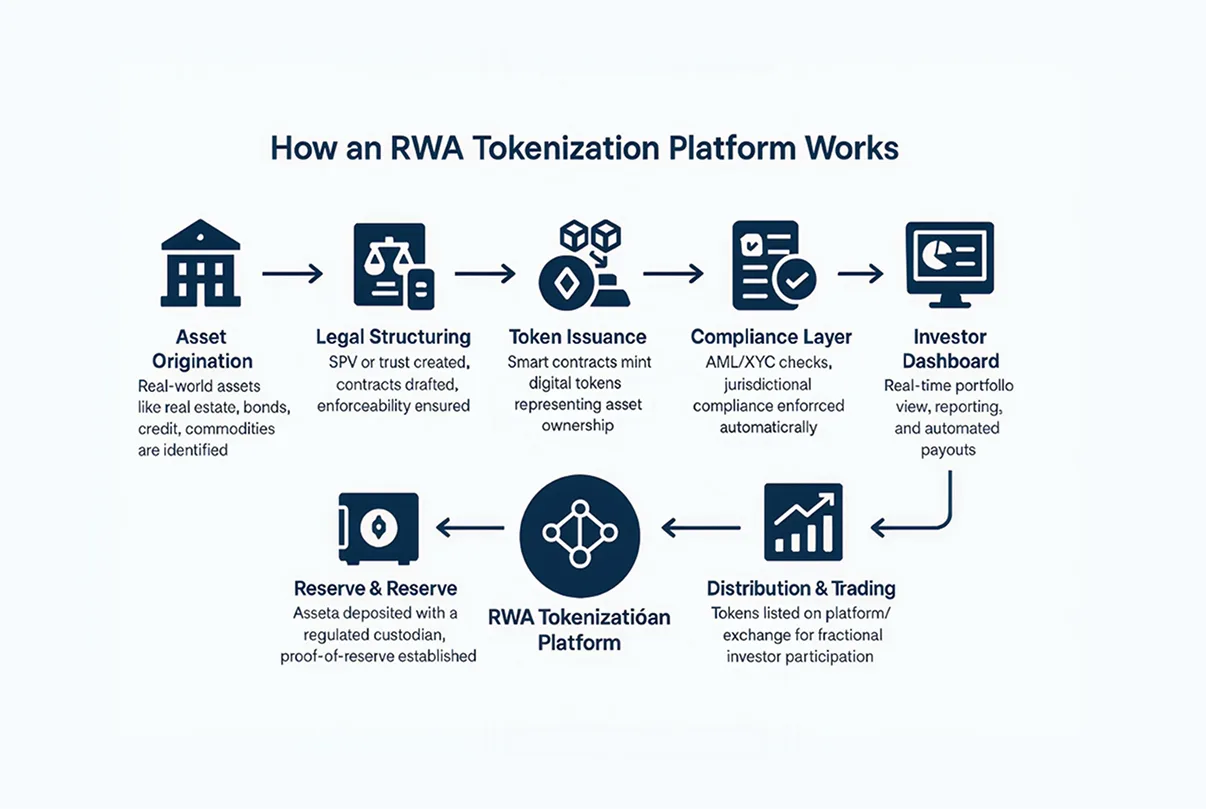
The narrative around tokenized assets in DeFi has shifted from speculative experimentation to institutional-scale deployment. In 2026, the primary driver is no longer just technological novelty, but the tangible utility of tokenized assets in providing yield and liquidity to traditional finance. This transition is marked by a significant increase in total value locked (TVL) within RWA-focused protocols, moving beyond niche crypto-native users to include pension funds, family offices, and corporate treasuries.
The growth is underpinned by a maturing infrastructure that addresses the historical friction points of cross-border settlements and asset fragmentation. By tokenizing assets like treasury bills, private credit, and real estate, DeFi hubs on networks like Base are creating a bridge between traditional financial rails and decentralized execution. This allows for 24/7 settlement, fractional ownership, and programmable compliance, features that traditional markets struggle to replicate at scale.
Liquidity is the lifeblood of this ecosystem. As stablecoins like USDC continue to dominate on-chain transaction volume, they serve as the primary settlement layer for RWA trades. The integration of these stablecoins with tokenized yields creates a powerful feedback loop: investors seek yield in tokenized assets, which in turn drives demand for the underlying stablecoins, further deepening liquidity pools. This dynamic is evident in the rising volumes of tokenized U.S. Treasuries, which now compete directly with money market funds for institutional capital.
The regulatory landscape, particularly in key jurisdictions like the EU with MiCA and the U.S. with evolving SEC guidance, is providing the clarity needed for large-scale capital entry. While compliance remains a complex operational layer, the legal frameworks are becoming more standardized, reducing the perceived risk for traditional financial institutions. This regulatory certainty, combined with the operational efficiency of blockchain settlement, is accelerating the adoption of tokenized assets as a standard component in diversified portfolios.
Strategic opportunities for builders and investors
Participating in the Base tokenized asset ecosystem requires moving beyond speculative trading to understand the underlying infrastructure. Success depends on how effectively you can bridge off-chain value with on-chain liquidity. This section outlines concrete strategies for both capital allocators and protocol developers.
For Investors: Yield and Liquidity
Investors should focus on protocols that offer transparent yield generation from tangible assets. Look for platforms where the underlying collateral—such as treasury bills or private credit—is verified and insured. Avoid opaque yield sources; instead, prioritize protocols with audited smart contracts and clear legal wrappers.
Liquidity provision is another viable strategy. By providing liquidity to RWA pools on Base, you can earn trading fees and potential incentives. However, this comes with impermanent loss risks if the tokenized asset’s price diverges significantly from its underlying value. Stick to stable, low-volatility assets for safer liquidity positions.
For Builders: Infrastructure and Integration
Builders have a unique opportunity to create tools that simplify RWA onboarding. The primary bottleneck is not technology, but user experience. Focus on building interfaces that abstract away the complexity of asset verification and legal compliance. Tools that allow seamless integration of Oracle data, such as Chainlink, can significantly enhance trust and accuracy in asset pricing.
Another key area is cross-chain interoperability. While Base is the hub, assets often originate from other chains. Building bridges or aggregators that allow users to easily move tokenized assets between Base and other ecosystems can capture significant market share. Ensure your smart contracts are audited and your legal frameworks are robust before launch.
Evaluation Checklist
Before committing capital or development resources, use this checklist to evaluate Base RWA opportunities:
- Legal Structure: Does the protocol have a clear legal wrapper for the underlying assets?
- Audit Status: Have the smart contracts been audited by a reputable firm?
- Oracle Reliability: Is the price data sourced from a trusted, decentralized oracle network?
- Liquidity Depth: Is there sufficient liquidity to exit positions without significant slippage?
- Team Transparency: Is the development team and legal counsel publicly identified and verifiable?
No comments yet. Be the first to share your thoughts!