Why Base leads RWA infrastructure
Base has emerged as the dominant chain for Real-World Asset (RWA) tokenization, driven by its unique combination of low-cost infrastructure and institutional-grade security. While many Layer 2 solutions compete for DeFi volume, Base’s design specifically lowers the barrier for onboarding traditional financial assets. The network’s fee structure allows for high-frequency settlement without eroding the margins of tokenized assets, a critical factor for institutions managing large portfolios.
The network’s growth in total value locked (TVL) within the RWA sector reflects this strategic fit. As stablecoins and tokenized treasuries gain traction, Base provides the liquidity depth and composability required for serious financial applications. This infrastructure support enables protocols to scale without the congestion issues that plague older L2 networks during peak demand.
Institutional adoption is accelerating as firms recognize the operational advantages of Base’s EVM compatibility and Coinbase’s integrated fiat on-ramps. This ecosystem creates a direct pipeline for traditional finance to interact with on-chain assets, reducing friction in custody and compliance processes. The result is a robust environment where RWA hubs can thrive, offering transparency and efficiency that legacy systems struggle to match.
Mapping the tokenized credit ecosystem
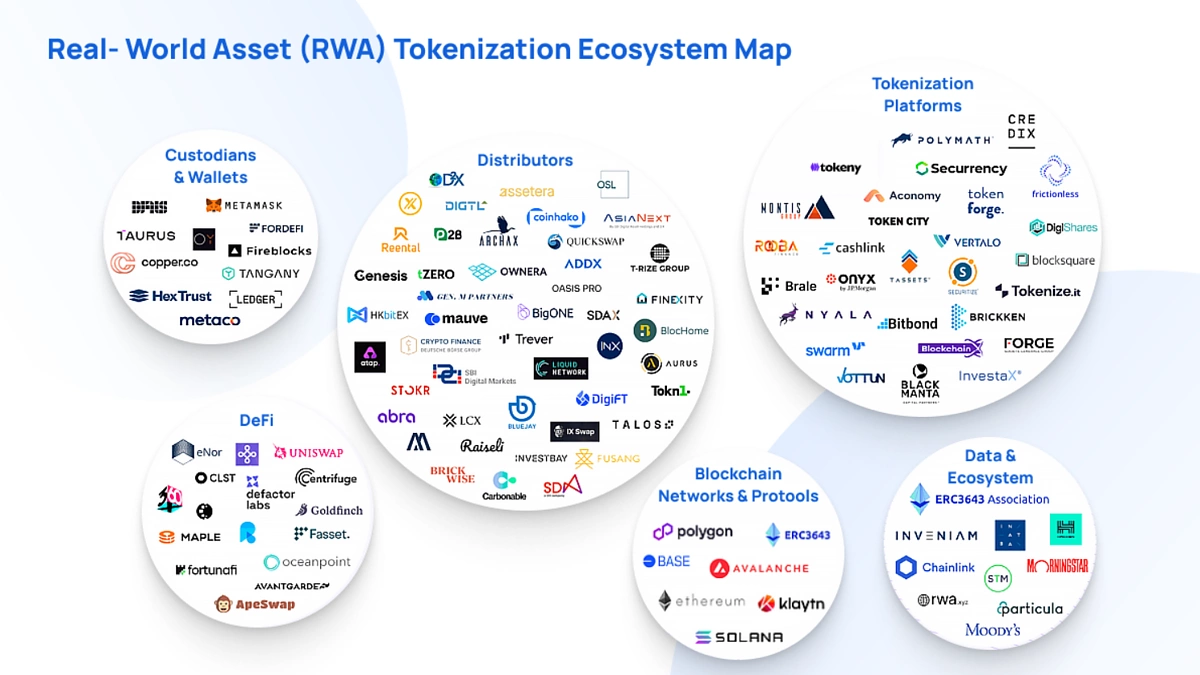
Tokenized credit on Base isn't just about moving assets on-chain; it's about reconstructing the plumbing of traditional finance using transparent code. The ecosystem relies on three distinct layers: the issuers who originate the underlying credit, the custodians who hold the physical or legal proofs, and the DeFi lending protocols that provide the liquidity and pricing mechanisms.
Issuers are the entry point. They take real-world assets—like invoices, real estate deeds, or private credit loans—and wrap them in smart contracts. This process requires rigorous legal structuring to ensure that holding the token equates to holding the underlying claim. Without this legal bridge, the token is just a speculative asset with no cash flow backing.
Custodians provide the trust layer. They hold the actual assets off-chain or in regulated digital vaults, issuing proofs that can be verified on-chain. This separation of custody and tokenization allows for fractional ownership while maintaining the integrity of the original asset. The choice of custodian often dictates the regulatory jurisdiction and the level of investor protection available.
DeFi lending protocols act as the marketplace. They allow these tokenized assets to be used as collateral for borrowing stablecoins or other crypto assets. This creates a liquid secondary market for typically illiquid private credit. By tokenizing the credit, issuers can access global capital pools instantly, bypassing traditional banking intermediaries.
To understand how these components compare in practice, we can look at the leading RWA protocols operating on Base. The table below highlights key differences in asset type, total value locked (TVL), and risk profile.
| Protocol | Primary Asset | TVL (USD) | Risk Profile |
|---|---|---|---|
| Centrifuge | Real Estate & Private Credit | 150M+ | Medium |
| Goldfinch | Unsecured Business Loans | 50M+ | High |
| Maple Finance | Corporate Credit | 100M+ | Medium-High |
| Clearpool | Institutional Debt | 75M+ | Medium |


As an Amazon Associate, we may earn from qualifying purchases.
Essential tools for onchain asset management
Managing tokenized real-world assets on Base requires a stack that bridges traditional finance infrastructure with onchain liquidity. The software landscape here is less about speculative trading and more about verification, custody, and settlement. Developers and investors rely on specific tools to ensure that the digital token accurately reflects the underlying physical asset.
At the core of this infrastructure is oracle technology. Oracles like Chainlink provide the critical data feeds that connect offchain asset prices and events to the blockchain. Without reliable oracles, a tokenized treasury bill or real estate instrument cannot update its value in real-time. This data layer is what allows DeFi protocols to accept these assets as collateral with confidence.
For investors, the primary interface for these assets is often the stablecoin itself. Most RWA yields on Base flow through tokenized U.S. Treasuries or money market funds, which are distributed as stablecoins. Monitoring the price and stability of these tokens is the first step in assessing hub health.
Beyond data and assets, the actual management of these tokens involves specialized smart contract frameworks. Protocols like Centrifuge and Ondo Finance provide the tokenization infrastructure that mints and burns assets based on offchain proofs. On Base, these integrations allow users to interact with real-world yields through familiar DeFi interfaces, reducing the friction of traditional asset management.
The choice of tool depends on whether you are building liquidity or just seeking yield. Builders need to focus on oracle reliability and smart contract security audits. Investors should prioritize platforms with transparent reserve reporting and regulatory compliance, ensuring that the token they hold is fully backed and redeemable.
The Hidden Risks of Tokenized Credit on Base
Tokenized credit on Base promises to bridge traditional finance with decentralized liquidity, but the infrastructure is still catching up to the ambition. While the chain offers low fees and high throughput, the underlying mechanisms for tokenized debt carry specific vulnerabilities that differ from standard DeFi protocols.
Smart contract risk remains the primary technical threat. A 2024 analysis of 39 mainstream RWA projects found significant security deficiencies, particularly in user identification and on-chain verification layers (Chen, 2024). Unlike liquid markets where exits are immediate, credit tokens often rely on complex oracles and off-chain legal wrappers. If the smart contract fails to correctly enforce repayment logic or if the oracle feed is manipulated, the collateralization ratio can collapse instantly, leaving holders with worthless tokens.
Regulatory uncertainty adds another layer of friction. Tokenized credit instruments often fall into gray areas between securities and commodities depending on the jurisdiction. Unlike simple stablecoins, credit tokens imply a counterparty obligation. If the issuer defaults or faces regulatory action, the token’s value is tied to legal recourse, not just code execution. This creates a dual dependency on both technical security and legal enforceability.
Liquidity constraints are perhaps the most practical hurdle. Academic research highlights a significant gap between tokenization and tradability (arXiv, 2025). While issuing tokenized debt is efficient, secondary market depth is often thin. In times of stress, the lack of institutional market makers can lead to severe slippage or an inability to exit positions, effectively locking up capital. This illiquidity premium must be priced into yields, but it also increases systemic risk if multiple protocols face simultaneous redemption requests.
Base RWA market trends
The technicals for Base’s real-world asset (RWA) hubs show a clear structural shift. Liquidity is moving from speculative derivatives toward tokenized treasuries and private credit. This isn't just noise; it's a fundamental change in how capital flows on the network.
Trading volumes on Base’s top RWA protocols have stabilized after the initial hype cycle. The data suggests that institutional participants are using these hubs for yield generation rather than short-term speculation. This stability is critical for long-term infrastructure growth.
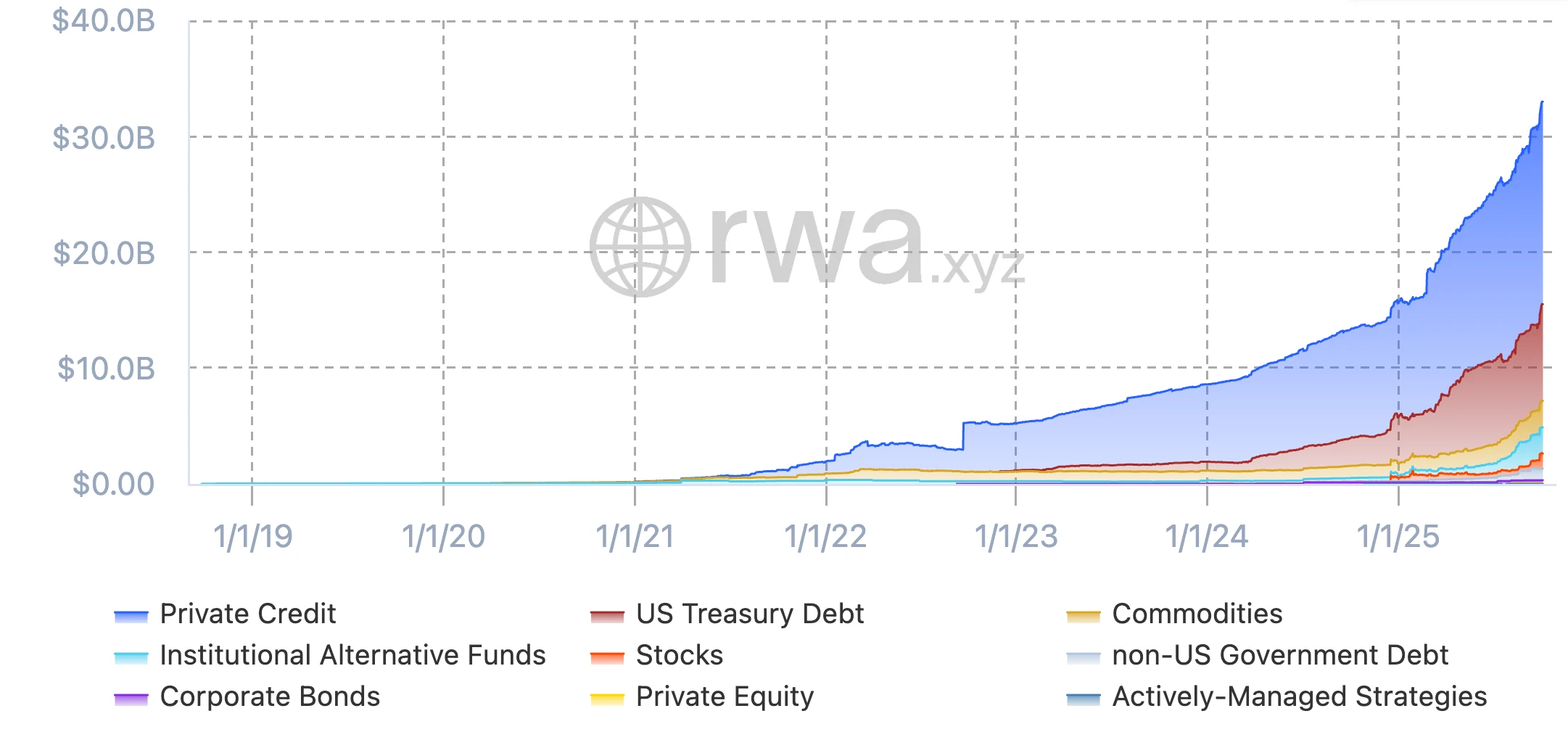
To visualize this momentum, we track the broader RWA index against Base’s native token. The correlation highlights how infrastructure upgrades on Base directly impact asset tokenization efficiency.
Frequently asked questions about RWA
What is the best RWA coin to buy?
There is no single "best" token because RWA strategies vary by yield source and risk profile. On Base, infrastructure projects like Aave or Maker (via its Base deployments) offer exposure to tokenized Treasuries and real estate. Instead of chasing speculative altcoins, evaluate the underlying asset's yield, the protocol's audit history, and the liquidity depth on Base DEXs.
Are RWAs the future of DeFi?
Many institutional players view RWA as a primary growth vector for Web3. Keyrock projects that RWAs could drive a significant influx of global capital—potentially 2% of the global money supply—into Web3 by 2028, led by stablecoin integration. This shift moves DeFi beyond native crypto speculation toward traditional financial instrument tokenization.
Does XRP tokenize real-world assets?
While the XRP Ledger (XRPL) supports tokenization of U.S. Treasuries, real estate, and commodities, this is distinct from Base's ecosystem. Base focuses on Ethereum-compatible RWA hubs, primarily utilizing ERC-20 standards for asset representation. XRP's approach operates on a separate consensus layer and is not directly comparable to Base's DeFi infrastructure.
What are the risks of investing in RWAs?
RWA tokens carry unique risks beyond standard crypto volatility. These include smart contract vulnerabilities, counterparty and custodial exposure (who holds the physical asset?), and regulatory uncertainty across jurisdictions. Liquidity constraints can also hinder redemptions during market stress. Always verify the legal structure and audit status of the RWA protocol before deploying capital.
No comments yet. Be the first to share your thoughts!