Why Base Leads RWA Tokenization
Base has emerged as the primary infrastructure layer for real-world asset (RWA) tokenization in 2026, not by accident, but through deliberate design choices that align with institutional needs. While Ethereum remains the settlement layer for high-value finality, Base has become the operational layer where RWA protocols actually live and transact daily.
The network’s low-cost, high-throughput environment is critical for RWA. Tokenizing physical assets—like real estate, commodities, or private credit—generates frequent, small-value transactions. These include interest payments, dividend distributions, and secondary market trades. On older chains, gas fees often eat into the thin margins of these operations. Base’s fee structure, powered by Optimism’s OP Stack, keeps costs predictably low, making it economically viable to tokenize smaller asset classes that were previously too expensive to move on-chain.
Coinbase’s integration adds another layer of advantage. As one of the largest regulated crypto exchanges, Coinbase provides a direct pipeline for liquidity and user onboarding. Protocols built on Base can leverage Coinbase’s infrastructure for compliance, custody, and fiat on-ramps. This reduces the friction for traditional finance (TradFi) players who need to meet regulatory standards while accessing crypto-native efficiency. The result is a network where institutional players can deploy capital with less technical overhead and lower counterparty risk.
Network effects reinforce this position. As more RWA protocols choose Base for its cost and compliance tools, developers build there to access that liquidity. This creates a feedback loop: more assets lead to more users, which leads to more development, further cementing Base’s role as the hub for tokenized real-world assets.
Key protocols shaping the ecosystem
The abstract promise of on-chain real estate or invoices only becomes useful when specific protocols handle the heavy lifting. On Base, the infrastructure is moving from experimental pilots to production-grade systems that settle real-world value. We are seeing a split between pure infrastructure layers that handle issuance and compliance, and consumer-facing applications that bundle these assets for yield.
Infrastructure and Issuance
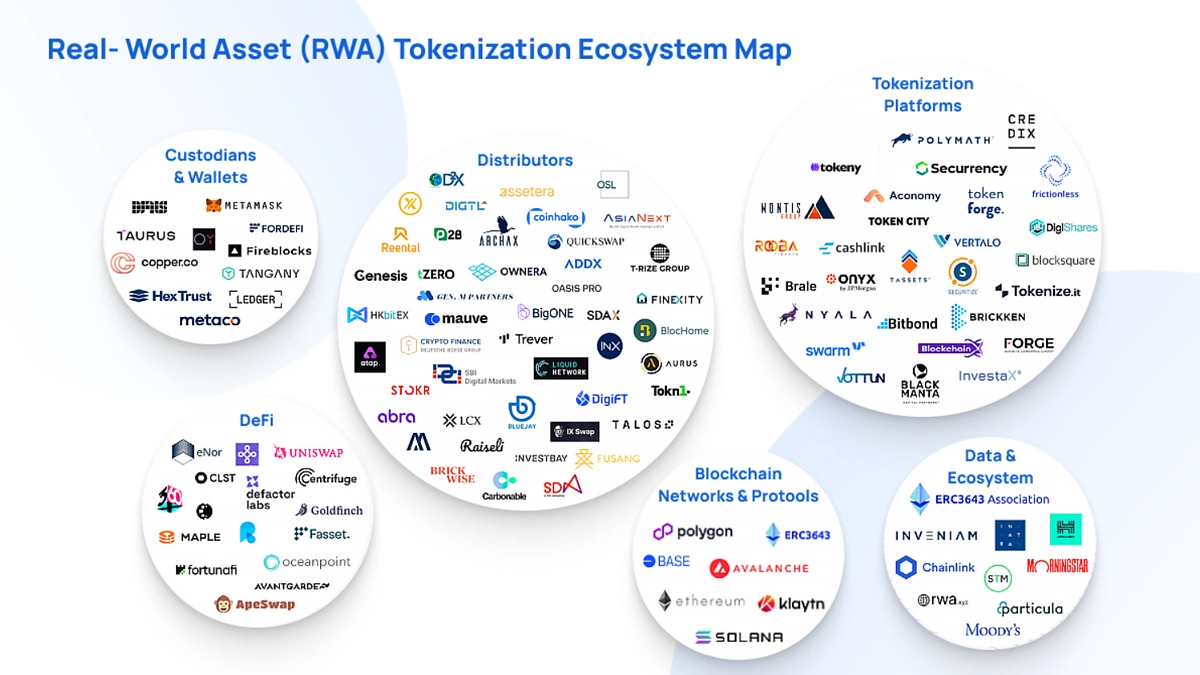
Tokeny and Centrifuge form the backbone of this stack. Tokeny provides the legal and technical framework to issue compliant tokens, allowing traditional financial institutions to bridge assets onto the blockchain without building their own compliance engine. Centrifuge, meanwhile, focuses on the asset origination side, connecting real-world credit with DeFi liquidity. Its integration with Aave on Base allows lenders to access yields backed by invoices and real estate, creating a direct pipeline for institutional capital.
Consumer-Facing Yield
For everyday users, the complexity of tokenization is abstracted away by platforms like Goldfinch and Maple Finance. Goldfinch pioneered credit-based lending without crypto collateral, and its presence on Base extends this model to new asset classes. Maple Finance, often compared to a hedge fund for institutional capital, uses smart contracts to manage underwriting and risk. On Base, these protocols offer higher efficiency due to lower gas costs, making micro-investments in tokenized assets viable for smaller participants.
The Infrastructure Layer
The efficiency of these protocols relies on the underlying Base infrastructure. Layer 2 solutions like Base reduce the friction of on-chain transactions, which is critical for RWA where settlement speed and cost matter. The combination of low fees and high throughput allows protocols to handle smaller ticket sizes that were previously uneconomical on Ethereum mainnet. This accessibility is driving the current wave of adoption, turning RWA from a niche institutional product into a broader market segment.
| Protocol | Type | Primary Focus |
|---|---|---|
| Tokeny | Infrastructure | Compliant Issuance |
| Centrifuge | Originator | Real-World Credit |
| Goldfinch | Lending | Uncollateralized Credit |
| Maple Finance | Institutional | Institutional Capital |
Market data and performance trends
The growth trajectory of Real-World Asset (RWA) Total Value Locked (TVL) on Base tells a clear story of institutional adoption meeting retail accessibility. As of early 2026, Base has emerged as a primary settlement layer for tokenized treasuries and credit, driven by protocols that prioritize low-cost finality and deep liquidity integration with Ethereum's broader ecosystem.
Protocol-level data from Ondo Finance and Centrifuge highlights this shift. Ondo’s USDY and OUSG tokens have seen consistent inflows, leveraging Base’s infrastructure to reduce onboarding friction for traditional finance participants. Similarly, Centrifuge’s pipeline of real-world credit assets has expanded significantly on Base, moving beyond speculative DeFi into tangible yield generation backed by invoices and real estate.
Trading volume on Base for RWA-related pairs has correlated strongly with broader ETH market movements, yet with distinct resilience during periods of high gas fees on Layer 1. This decoupling of operational cost from asset performance is a key driver for the network's RWA hub status. Investors are increasingly treating Base-based RWA tokens not just as yield vehicles, but as stable, regulatory-compliant bridges to traditional markets.
This chart illustrates the macro correlation between ETH and the broader RWA sector on Base. While ETH provides the base liquidity, the specific RWA tokens on Base often show lower volatility relative to pure meme coins, reflecting their underlying asset backing. The volume spikes often align with major on-chain governance votes or new protocol launches, indicating active institutional participation rather than passive holding.
Regulatory considerations for 2026
The high-stakes nature of Real-World Asset (RWA) DeFi isn't just about yield; it's about legal enforceability. In 2026, the gap between on-chain code and off-chain law is bridged by specific compliance infrastructure. Protocols on Base are no longer relying on vague "smart contract is law" arguments. Instead, they are integrating legal wrappers that tie token ownership to real-world jurisdiction.
The regulatory landscape has shifted from ambiguous gray areas to defined hubs. Jurisdictions like the UAE (specifically Dubai) and Singapore have established themselves as global leaders by creating legal sandboxes and clear guidelines for digital assets. These regions provide the necessary legal certainty for institutions to enter the space, making compliance a feature rather than an afterthought. For protocols operating on Base, this means structuring entities to operate within these friendly jurisdictions while serving a global user base.
Compliance infrastructure is now baked into the protocol layer. This includes KYC/AML integration directly within smart contracts, ensuring that only verified participants can interact with certain asset classes. This approach reduces counterparty risk and aligns with the increasing scrutiny from traditional financial regulators.
For investors and developers, the key takeaway is that regulatory compliance is the primary differentiator in 2026. Protocols that fail to establish clear legal wrappers and robust KYC/AML infrastructure will struggle to attract institutional capital. The future of RWA on Base is not just about faster transactions; it's about legally sound, compliant, and enforceable asset ownership.
How to Participate in Base RWA Hubs
Engaging with Base RWA hubs requires a shift from speculative trading to fundamental due diligence. You are no longer just betting on price action; you are assessing the legal and technical integrity of tokenized assets. This section outlines the practical steps for investors and builders to navigate this space in 2026.
Before interacting with any protocol, check if the underlying asset is held in a recognized legal structure. Look for SPVs or trusts registered in jurisdictions like Delaware or Switzerland. If the whitepaper doesn’t explicitly state where the legal title resides, treat it as high-risk. The Rebank practitioner guide emphasizes that tokenized financial assets merge DeFi utility with traditional safety only when legal claims are enforceable off-chain.
Base hosts many new RWA protocols. Ensure the core contracts have undergone audits from reputable firms like OpenZeppelin or Trail of Bits. More importantly, check for live bug bounty programs. Unlike pure DeFi, RWA contracts often include pause functions or admin keys; verify who controls these keys and whether multi-sig requirements are strictly enforced.
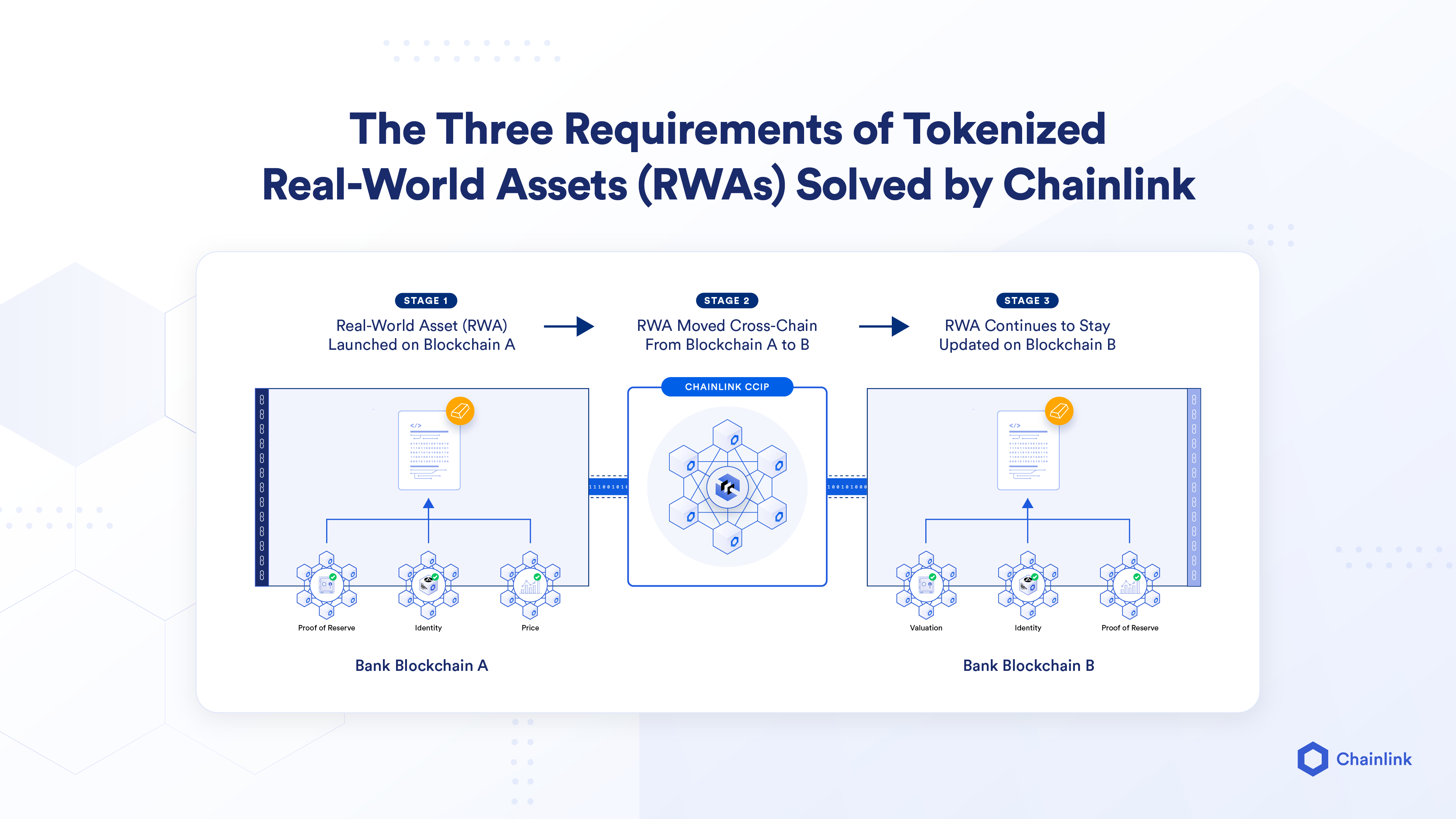
RWA yields depend on accurate off-chain data. Check which oracle network feeds the protocol Chainlink or Pyth. If a protocol relies on a single, unverified data source for asset pricing or interest rates, it is vulnerable to manipulation. Reliable oracles are the bridge between the real world and the blockchain; without them, the RWA thesis collapses.
The biggest risk in RWA is illiquidity. Before committing capital, check the depth of the liquidity pool or the secondary market availability. Can you exit your position within minutes, or are there lock-up periods? In 2026, true RWA hubs must support secondary trading without significant slippage.
| Feature | Traditional Finance | Base RWA Hubs |
|---|---|---|
| Settlement | ||
| Accessibility | ||
| Liquidity | ||
| Transparency |
No comments yet. Be the first to share your thoughts!