What are Base real-world asset DeFi hubs?
Real-world asset (RWA) DeFi hubs on Base are specialized onchain environments where physical assets—like real estate, invoices, or commodities—are tokenized and traded using Ethereum’s infrastructure. These hubs function as the intersection between traditional finance and decentralized protocols, allowing tangible value to move with the speed of code.
Unlike general crypto markets that trade speculative tokens, Base RWA hubs focus on delivery versus payment (DvP). This mechanism ensures that the transfer of the tokenized asset and the settlement of funds happen simultaneously. It eliminates counterparty risk, meaning you don’t have to trust that the other side will pay; the smart contract handles the exchange atomically.
Base serves as the settlement layer for these hubs. Its low transaction fees and high throughput make it ideal for high-frequency RWA trading, where even small gas costs can erode margins. By leveraging Base’s compatibility with Ethereum security, these hubs offer a robust framework for custody and compliance without the bloat of older L1 chains.
The core distinction here is infrastructure. General RWA narratives often discuss tokenization in the abstract. Base hubs are concrete: they are specific protocol deployments on this L2 that handle the legal wrappers, oracle feeds, and onchain settlement in one integrated stack.
Comparing top RWA infrastructure on Base
Comparing top RWA infrastructure on Base requires looking past the marketing to see how custody and compliance are actually handled. The difference between a protocol that merely lists tokens and one that manages the legal and technical lifecycle of an asset is significant. We are looking at where the money sits, how it moves, and who is responsible when things go wrong.
The following table breaks down the leading platforms building RWA hubs on Base. It focuses on three non-negotiables for high-stakes finance: the type of assets they support, how custody is managed, and their compliance features. Custody refers to who holds the private keys to the underlying asset or the tokenized claim. Compliance features determine if the platform can restrict trading to verified investors, a requirement for many securities.
| Platform | Asset Types | Custody Model | Compliance |
|---|---|---|---|
| Ondo Finance | U.S. Treasuries, Money Market Funds | Institutional Custodians | KYC/AML enforced |
| Centrifuge | Real Estate, Invoice Finance, Credit | Special Purpose Vehicles (SPVs) | Investor accreditation checks |
| Maple Finance | Institutional Credit, Stablecoins | Smart Contract Vaults | On-chain credit scoring |
| Goldfinch | Unsecured Corporate Credit | Smart Contract Vaults | Stakeholder voting models |
These infrastructure choices dictate the risk profile of your investment. For example, Ondo Finance relies heavily on traditional institutional custody solutions, which means your exposure is tied to the legal standing of those custodians and the U.S. government backing the treasuries. This is less about DeFi innovation and more about bringing traditional safety rails on-chain.
In contrast, platforms like Centrifuge and Maple Finance operate more like decentralized credit markets. Centrifuge uses Special Purpose Vehicles (SPVs) to hold the underlying real-world assets, such as invoices or real estate deeds. This legal wrapper is crucial because it separates the asset from the protocol itself. If the protocol fails, the asset may still be recoverable through the SPV structure. Maple and Goldfinch focus on credit risk, where the "custody" is often just the smart contract holding the collateral or the reputation of the borrowers.
When choosing an RWA hub on Base, you are essentially choosing your counterparty risk. Do you prefer the stability of government-backed securities with strict KYC (Know Your Customer) checks, or are you comfortable with the higher yield potential of private credit markets that rely on on-chain reputation and smart contract audits? The table above provides a starting point for that decision.
Market trends and liquidity drivers
The liquidity landscape for Base Real-World Asset DeFi Hubs is shifting from speculative experimentation to institutional-grade infrastructure. This transition is defined by a convergence of three specific signals: rising on-chain volume for tokenized treasuries, the implementation of atomic settlement protocols, and the integration of compliant custody solutions. Understanding these mechanics is essential for evaluating the sector's current trajectory.
Liquidity inflows are no longer driven by yield farming incentives alone. Instead, capital is flowing into hubs that facilitate Delivery versus Payment (DvP). In this model, the transfer of the tokenized asset and the payment of fiat or stablecoins occur simultaneously. This eliminates counterparty risk—the chance that one party defaults before the transaction completes—making RWA hubs attractive to traditional finance entities that cannot tolerate settlement lag.
Institutional adoption is further accelerated by regulated custody. Unlike self-custodied wallets, institutional-grade custody ensures that the private keys controlling the underlying off-chain assets are held by audited, insured third parties. This structure allows large capital allocators to participate in DeFi without exposing their balance sheets to the operational risks common in unregulated crypto environments. The combination of DvP and custody creates a "trust-minimized" bridge, allowing real-world capital to move on-chain with legal certainty.
The economic incentives for using Base-based hubs stem from this efficiency. Base’s low transaction costs and high throughput enable fractional ownership of assets like real estate or private credit at a scale that is economically viable. When combined with the liquidity depth provided by major stablecoins, these hubs offer a compelling alternative to traditional securities markets, which often suffer from slow settlement times and high intermediary fees.
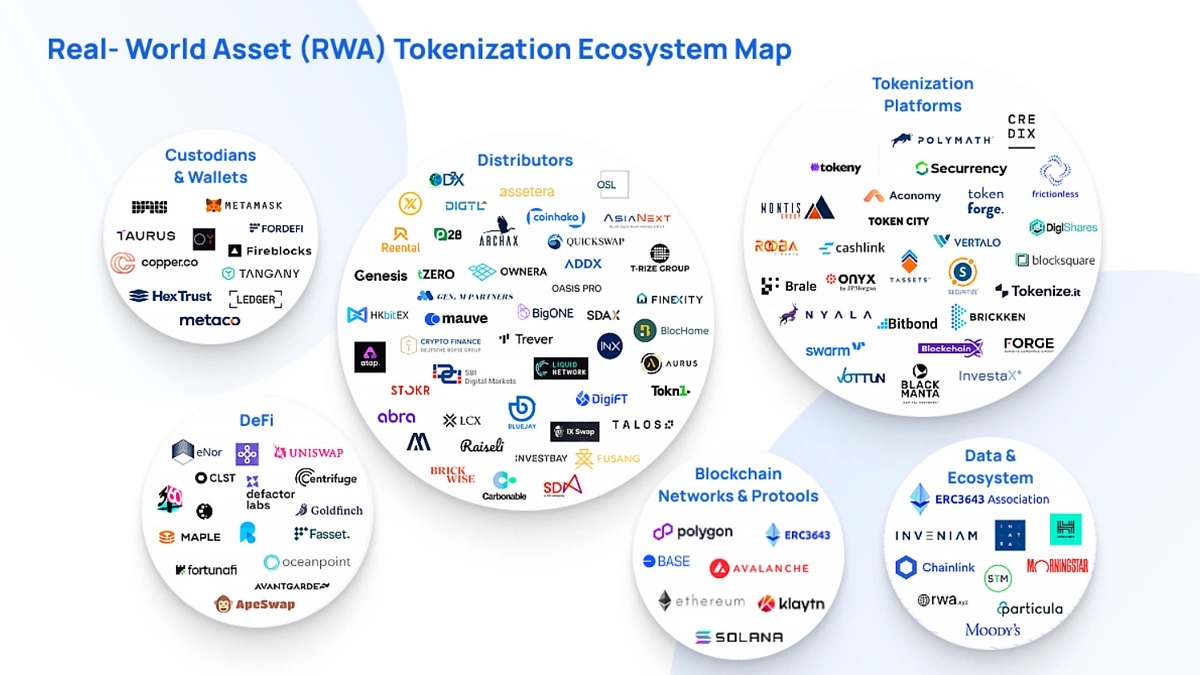
To visualize the broader market sentiment driving these infrastructure upgrades, the following chart tracks the performance of the Real World Asset (RWA) sector, highlighting the correlation between tokenization adoption and market capitalization trends.
Strategic use cases for tokenized assets
Tokenized assets on Base aren’t just digital replicas; they are operational tools that solve specific friction points in traditional finance. By leveraging Base’s low fees and high throughput, institutions and sophisticated investors can execute complex workflows that were previously too expensive or slow to justify.
Real estate fractionalization
Traditional real estate investment is illiquid and capital-intensive. Tokenization splits ownership into digital shares, allowing investors to buy fractions of high-value properties. On Base, this process relies on custody arrangements where a regulated entity holds the physical deed, while smart contracts manage the distribution of rental income and voting rights. This structure lowers the entry barrier from millions to hundreds of dollars, creating a secondary market for property shares that was previously nonexistent.
Treasury management
Corporate treasuries are increasingly allocating portions of their reserves to yield-bearing tokenized assets like U.S. Treasuries or money market funds. Unlike traditional bank deposits, these on-chain assets settle instantly and can be used as collateral for other DeFi activities. This dual utility—earning yield while maintaining liquidity—allows firms to optimize capital efficiency without locking funds away for long periods.
Cross-border payments
Settlement delays and foreign exchange fees plague international trade. Tokenized assets enable near-instant cross-border transfers by bypassing correspondent banking networks. Using stablecoins or tokenized fiat on Base, businesses can settle invoices in seconds rather than days. This reduces counterparty risk and improves cash flow visibility, which is critical for global supply chains.
Evaluating infrastructure
Before deploying capital, institutions must verify the underlying infrastructure. A checklist for evaluating Base RWA hubs includes:
- Custody Solutions: Are assets held by regulated, insured custodians?
- Regulatory Alignment: Does the platform comply with KYC/AML requirements in relevant jurisdictions?
- Liquidity Depth: Is there sufficient market depth to exit positions without significant slippage?
- Smart Contract Audits: Have the protocols undergone rigorous third-party security audits?
These use cases demonstrate how Base serves as a practical layer for real-world finance, bridging the gap between traditional asset classes and decentralized infrastructure.
Key questions about Base RWA hubs
Real-world assets in DeFi are digital tokens representing physical or traditional financial instruments like currencies, commodities, or real estate [1]. This tokenization bridges traditional finance with blockchain liquidity.
XRP is not typically classified as an RWA. It serves as a native bridge currency for cross-border settlements rather than a tokenized representation of a specific underlying asset.
Top RWA platforms include Centrifuge, Goldfinch, and Ondo Finance. These protocols specialize in different asset classes, from private credit to tokenized U.S. treasuries [2].
RWAs are viewed as a structural evolution for DeFi. They provide yield-bearing assets that are less volatile than native crypto tokens, potentially stabilizing the ecosystem long-term.
Helpful gear
Use these product recommendations as a starting point, then choose the size, material, and price point that fit how you actually use the gear.

As an Amazon Associate, we may earn from qualifying purchases.
No comments yet. Be the first to share your thoughts!